
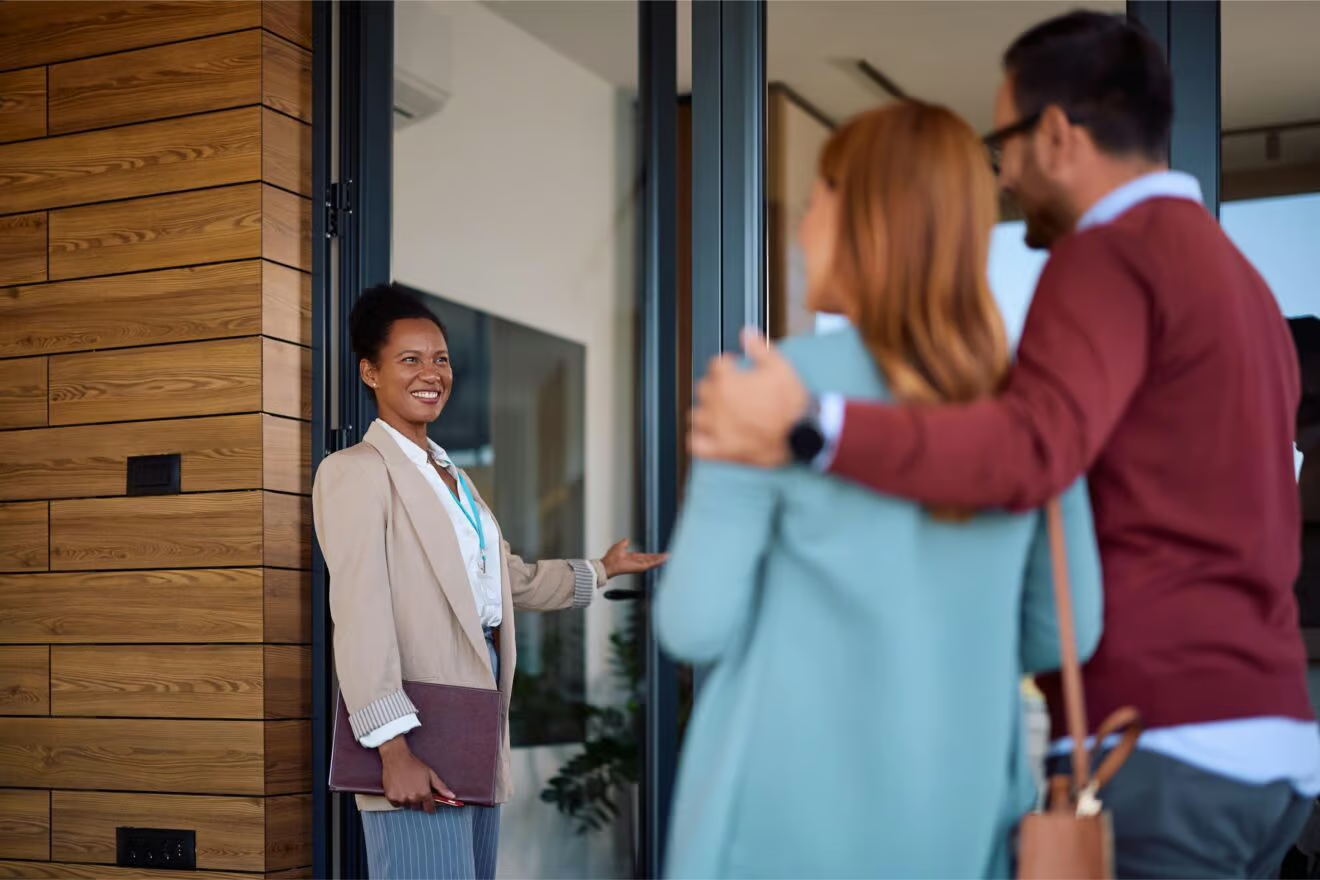
An open house in real estate is a scheduled time when a home for sale is made available for people to walk through without booking a private showing in advance. It gives potential buyers a chance to view the property in a more casual setting and allows the Realtor to answer questions, highlight features and gauge interest.
While open houses can be useful, they are only one piece of a larger selling strategy. On their own, they are not enough to sell a home for the best possible price.
For sellers, the key is understanding what an open house can and cannot do, and how it should fit into a proper marketing plan.
What Happens at an Open House?
During an open house, the property is typically available to view for a set window of time, often on a Saturday or Sunday afternoon. Instead of scheduling individual appointments, people can simply arrive during the advertised time and walk through the home.
The listing agent or another representative from the real estate team is there to welcome visitors, answer basic questions and collect feedback. Buyers may ask about the age of certain updates, the neighbourhood, property taxes, nearby amenities or the offer process.
For sellers, the home should be prepared the same way it would be for any private showing. That means it should be clean, decluttered, well-lit and presented at its absolute best. Even though the format may feel more casual, every person walking through the door is still forming an opinion about the property.
Want to get the best results possible from your home sale? Explore these blogs for more advice.
- Why Sell Your House With Pilon Group?
- When Is the Best Time to Sell a House?
- How to Sell Your Ottawa House Fast
Can Anyone Go to an Open House?
In most cases, yes. Open houses are usually open to the public, which means buyers can attend without an appointment and often without being represented by an agent.
This is part of what makes open houses appealing. They lower the barrier for people who may be curious about the home but not ready to book a private showing. They can also attract buyers who are driving through the area, exploring a neighbourhood or simply comparing homes before getting serious.
However, this is also where sellers need to keep expectations realistic.
Not everyone who attends an open house is a serious buyer. Some visitors may be neighbours. Some may be early in the process. Some may not even be financially qualified. Some may simply be curious about the layout, renovations or pricing.
That does not mean open houses are useless. It simply means that traffic and serious interest are not the same thing.
Do Open Houses Work?
Open houses can work, but it depends on what you expect them to accomplish.
An open house can create extra exposure for a listing. It can bring more people through the property and it can generate feedback. It can sometimes catch the attention of a buyer who may not have booked a showing otherwise.
But an open house should not be viewed as the entire selling strategy.
The strongest buyers are usually already watching the market closely. They are set up on automatic listing alerts, working with a Realtor and booking private showings quickly when a property matches their needs. These buyers often do not wait for the weekend open house; if the right home comes up, they want to see it right away.
That means the most serious buyer activity often happens through private showings, not during a public open house. Last year, less then 1% of home buyers came from an open house.
So, do open houses work? They can be helpful as part of a broader plan, but they should not be relied on as the main reason a home sells.
What Are the Benefits of an Open House?
Open houses do offer several benefits when used properly.
First, they can create additional visibility. Advertising an open house online, on social media and through signage can help bring extra attention to a listing. Even buyers who do not attend may still notice the home because of the added promotion.
Second, they make it easier for buyers to view the property. Some buyers may not want to commit to a private showing yet, especially if they are early in their search. An open house gives them a low-pressure way to walk through and decide whether the home may be a fit.
Third, open houses can provide useful feedback. Visitors may comment on the price, layout, condition, updates or how the home compares to others they have seen. That information can help the seller and listing agent understand how the market is reacting.
Fourth, an open house can create a sense of activity. If several buyers are viewing the home at the same time, it may reinforce that the property is getting attention. That said, activity only matters if it is connected to serious buyer interest.
What Are the Limitations of an Open House?
The biggest limitation is that open houses often attract a wide range of visitors, not all of whom are ready, qualified or motivated to buy.
A busy open house may feel encouraging but a full room does not always mean an offer is coming. Sellers can sometimes get caught up in the number of people who attended when the more important question is whether any of those people are serious buyers.
Another limitation is that open houses are passive compared to a complete marketing strategy. They rely on people choosing to show up during a set time. A strong selling plan should be much more proactive. It should include proper pricing, professional presentation, high-quality photography and video, online exposure, social media promotion, targeted marketing, agent networking, buyer follow-up and a clear negotiation strategy.
An open house may support that plan, but it should never replace it.
What Should Sellers Focus on Instead?
If you are selling your home, the open house is not the first thing to focus on. The real priority is building a strategy that attracts serious buyers from the start.
That begins with pricing. Buyers are comparing your home to everything else available in the market. If the price feels too high compared to the competition, buyers may skip it completely or wait to see if you reduce.
Presentation is also critical. The way your home looks online and in person has a major impact on buyer interest. Cleaning, decluttering, staging guidance, small repairs, curb appeal and strong photography all help create a better first impression.
Marketing matters as well. Buyers need to see the home before they can fall in love with it. A listing should be positioned properly before it hits the market, promoted across the right channels and supported by a plan to reach the most likely buyers.
Finally, follow-up is essential. Whether buyers come through a private showing or an open house, their feedback matters. A good listing strategy includes following up with agents and buyers, identifying objections and adjusting when necessary.
On the hunt for more insights about home selling? Read these blogs next!
- How to Price a Home for Sale
- Home Selling Checklist For Spring
- Why Should I Sell My Home Before Buying?
Is an Open House Worth Doing?
In many cases, an open house is worth doing, as long as it is understood for what it is.
It is a tool. It is not the strategy.
An open house can add exposure, create convenience and generate feedback. But the success of a home sale usually comes down to the fundamentals: pricing, presentation, marketing, timing, negotiation and follow-up.
Sellers sometimes say, “Let’s just do an open house and see what happens.” The problem is that hope is not a strategy. A smart selling plan should already be in place before the first buyer walks through the door.
Final Thoughts
An open house in real estate is a scheduled opportunity for buyers to walk through a home without booking a private showing. In most cases, anyone can attend, and it can be a useful way to create extra visibility and activity around a listing.
But open houses should be kept in perspective. They may help support the sale, but they should not be confused with the full plan to sell your home.
If you are thinking about selling your home and want to understand what strategy makes the most sense for your property, our team would be happy to help. Contact us today to start the conversation and get a plan built around your home, your market and your goals.
Ready to sell? We’re here to help! Call 613.909.8100 or reach us by email at info@PilonGroup.com.

Get Started
Get to know Ottawa’s leading real estate agents, and how we make the market work for you.