


The Ottawa real estate market remained relatively steady in September, with home sales holding close to August levels instead of following the typical seasonal decline. At the same time, new listings increased significantly, giving Ottawa home buyers more choice and shifting market conditions further in their favour.
The September 2026 Ottawa housing market also showed signs of softer demand. The gap between the number of homes coming onto the market and the number selling widened, resulting in higher inventory and more negotiating room for buyers.
Ottawa Residential Market Activity
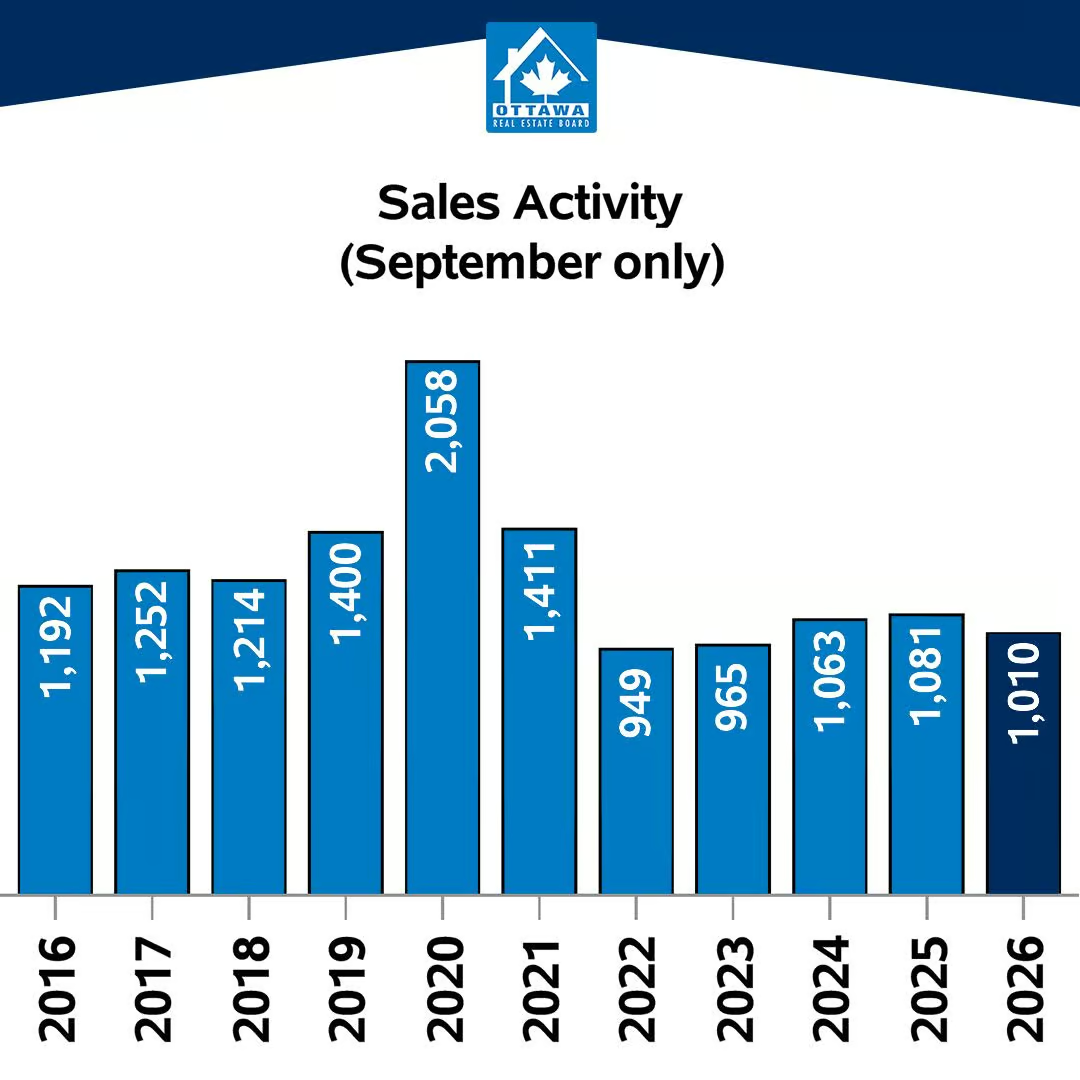
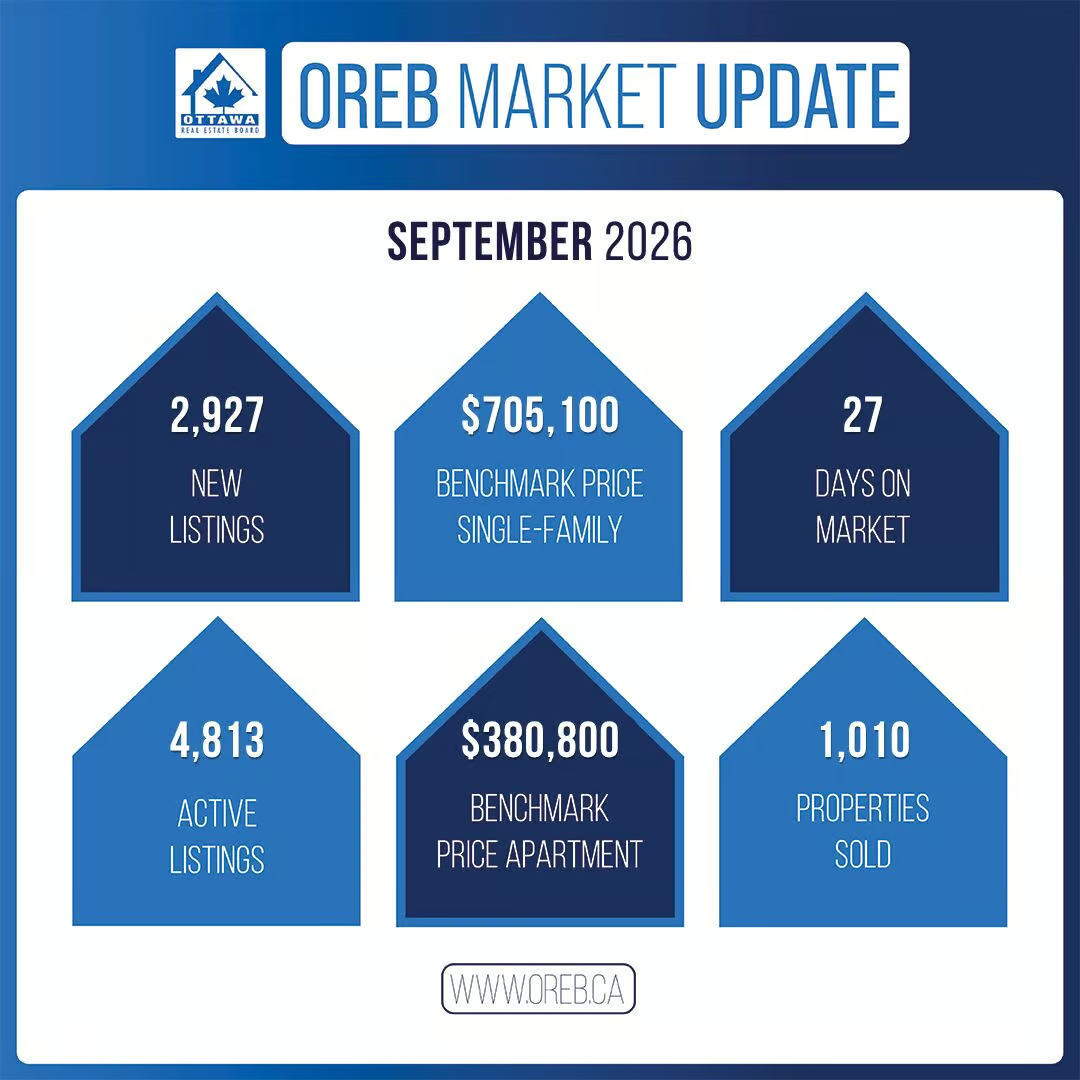
A total of 1,010 homes were sold through the MLS® System in September, down 6.6% compared with September 2025. Sales increased slightly from August, when 1,002 homes were sold. This was unusual for the time of year, as sales have typically declined between August and September over the past decade.
Looking at July through September provides a broader picture of the Ottawa housing market. There were 3,336 sales during the three-month period, down 8.2% from the same period in 2025 and the third-lowest summer total since 2016.
Sales were lower than a year ago across all three major property types. Single-family home sales declined 4.6% to 535 transactions, while townhouse sales fell 3.5% to 329. Apartment sales experienced the largest decline, falling 24.8% to 121 transactions.
Year to date, 10,288 homes have sold in Ottawa, down 6.9% from the same period in 2025. Total year-to-date dollar volume was approximately $7.2 billion, a 7.3% decrease.
Ottawa Home Prices in September 2026
The average Ottawa home price was $685,640 in September, down 1.0% from September 2025 and nearly unchanged from August. The median sale price was $625,000, down 0.8% year over year and slightly higher than August.
The MLS® Home Price Index recorded a composite benchmark price of $623,500, down 0.3% from September 2025 and 2.2% from August.
While average and median sale prices remained relatively stable, the larger monthly decline in the benchmark price points to some underlying softness in Ottawa home values. The MLS® HPI accounts for changes in the types of homes being sold, providing a more consistent measure of home price trends.
September’s 2.2% monthly HPI decline was the largest August-to-September decrease in Ottawa’s HPI series, which dates back to 2005. Even after adjusting for normal seasonal patterns, the benchmark declined 1.5%.
One month does not establish a long-term trend, but the price movement is worth watching alongside the increase in inventory and weaker sales-to-new-listings ratio.
More Ottawa Homes for Sale
September brought a significant increase in new listings. There were 2,927 new listings, up 3.0% from September 2025 and 38.1% from August.
Some increase in listings is normal as the fall market begins, but this year’s increase was considerably larger than the 10-year median August-to-September increase of 12.9%.
From July through September, 7,576 homes were newly listed in Ottawa, the highest total for those three months since 2016. At the same time, sales recorded their third-lowest total over the same period.
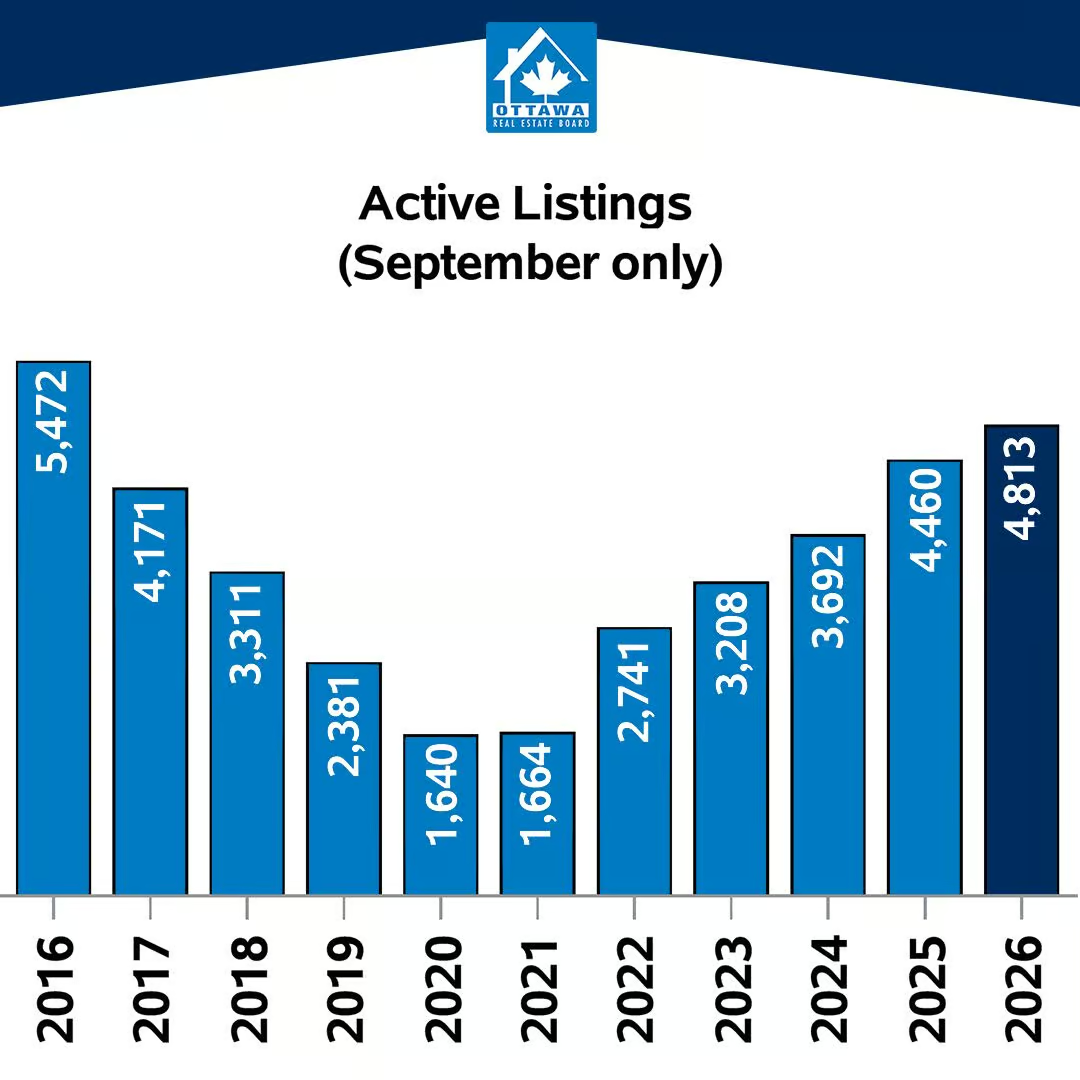
Active listings reached 4,813 in September, up 7.9% from a year earlier and 7.1% from August. This was the second-highest September level since 2016.
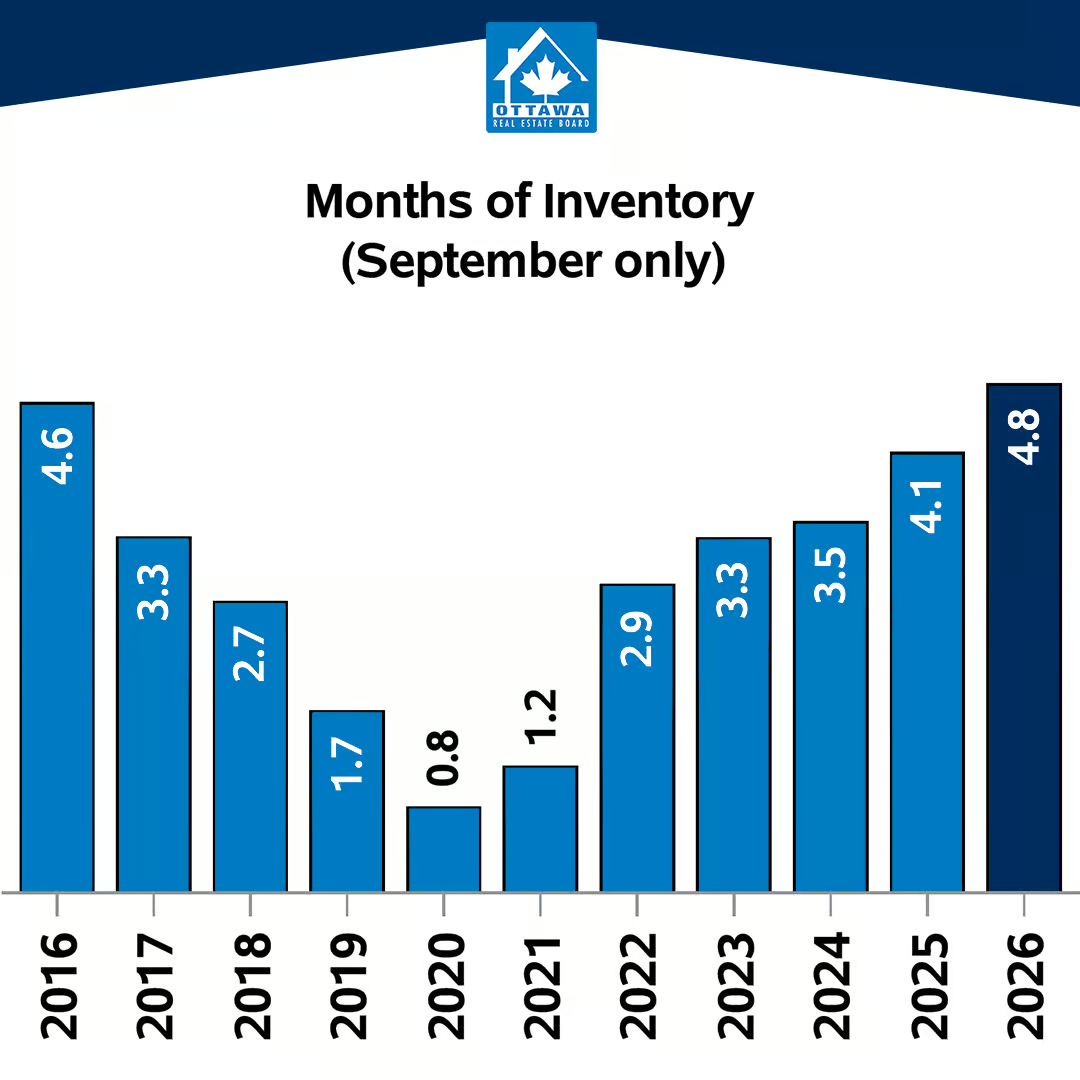
The sales-to-new-listings ratio fell from 47.3% in August to 34.5% in September, meaning roughly one home sold for every three new listings. Months of inventory also increased from 4.5 to 4.8.
For Ottawa home buyers, the increase in inventory means more choice, more time to make decisions and potentially more negotiating room. Affordability and borrowing costs continue to limit demand, however.
Homes sold for an average of 97.5% of their listing price in September, compared with 98.1% a year earlier. The median time on market also increased from 22 to 27 days.
Ottawa Market Conditions by Property Type
Single-family homes recorded 4.4 months of inventory, with a benchmark price of $705,100. The benchmark was nearly unchanged from a year earlier but declined 3.0% from August.
Townhouses recorded 4.0 months of inventory and a benchmark price of $546,500, down 2.2% year over year and essentially unchanged from August.
Apartments continued to experience the softest market conditions of the three major property types. Months of inventory increased from 6.3 to 7.3, while the sales-to-new-listings ratio fell from 43.0% to 27.0%.
The apartment benchmark price was $380,800, down 6.1% from September 2025 and 3.1% from August. While the average apartment sale price increased 0.9% year over year, the benchmark decline suggests that the mix of apartment sales influenced the average.
Overall, September’s Ottawa real estate market data points to a market with more inventory, slower absorption and greater choice for buyers. The next few months will be important to watch as we see whether the unusually high number of new listings in September follows the typical seasonal decline or keeps Ottawa housing inventory elevated into the fall.
Ottawa Regional Market Comparison
Ottawa’s three suburban submarkets continued to drive the majority of real estate activity in September, accounting for 734 sales, or 72.7% of all citywide transactions. Combined sales in these areas were down 8.0% from 798 sales in September 2025, with all three suburban markets recording fewer sales than a year earlier.
Ottawa Suburb West had the strongest absorption among the seven submarkets, with a sales-to-new-listings ratio of 40.7% and 3.7 months of inventory. Ottawa Suburb East recorded 4.3 months of inventory, while Ottawa Suburb South recorded 4.4 months.
More supply-sensitive market conditions were evident in Ottawa Centre and the rural areas. Ottawa Centre recorded a sales-to-new-listings ratio of 27.6% and 6.8 months of inventory. Months of inventory also reached 6.5 in Ottawa Rural South, 6.3 in Ottawa Rural East and 5.8 in Ottawa Rural West.
Price movements varied considerably across the rural Ottawa markets. However, because monthly sales ranged from only 40 to 88 transactions, larger percentage changes in these areas should be interpreted cautiously.
Ottawa Real Estate Market Outlook
One of the key questions heading into the fall was not simply how many homes were available for sale, but how quickly that supply was being absorbed.
Absorption weakened through August and September. The sales-to-new-listings ratio fell from 52.4% in July to 47.3% in August and 34.5% in September, while months of inventory increased from 3.5 to 4.5 and then 4.8.
September sales were nearly unchanged from August, but new listings increased 38.1%. This means the latest shift in Ottawa market conditions was driven primarily by substantially more supply competing for a similar number of sales.
How long this imbalance lasts will be important to watch. Listings normally decline as the Ottawa real estate market moves through October and November, so an improvement in absorption would suggest that at least part of September’s increase in supply was seasonal.
If the sales-to-new-listings ratio remains near its current level, months of inventory stays elevated and the MLS® Home Price Index continues to decline, the evidence of a broader price adjustment would become stronger.
Ottawa Apartment Market Remains Under Pressure
Apartments remain the clearest pressure point in the Ottawa housing market. Months of inventory increased to 7.3 in September, while the sales-to-new-listings ratio fell to 27.0%.
CMHC also expects Ottawa’s rental market to soften as a large construction pipeline is completed. Most of this new supply is purpose-built rental housing rather than resale condominiums, so it should not be considered a direct addition to resale inventory.
However, additional rental supply could still influence the resale market as renters and prospective buyers weigh a wider range of housing options.
Ottawa Housing Market Forecast
External forecasts generally point to limited near-term price growth followed by a gradual recovery. TD Economics forecasts Ontario’s existing-home prices to average 2.6% lower in 2026, followed by growth of 0.6% in 2027. RBC forecasts Canada’s benchmark price index to decline 2.3% in 2026 before increasing 0.8% in 2027.
CMHC’s Ottawa housing market outlook similarly expects sales to stabilize, while noting that slower demand growth and greater supply are limiting price increases.
These forecasts cover different geographic areas and use different price measures, so their figures are not directly comparable with Ottawa’s monthly real estate statistics. Their overall direction is nevertheless consistent with the local market data: Ottawa buyers have more choice, while current supply and demand conditions provide limited support for rapid price growth.
New Construction vs. Ottawa Resale Homes
Another trend worth watching is the potential shift in demand from resale homes toward new construction.
GOHBA reported 464 new-home sales in Ottawa in August, up 9.7% from July and 55.2% from a year earlier. Year-to-date new-home sales were also 50.4% higher.
This increase coincides with expanded HST relief for qualifying new homes, which may be improving the relative appeal of new construction and drawing some demand away from the resale market.
The figures do not establish that the HST rebate caused the increase in new-home sales, but the contrast between stronger new-home activity and weaker resale absorption is another trend worth monitoring.
What to Watch in the Ottawa Real Estate Market
The next few months will be important for Ottawa home buyers and sellers.
October and November will show whether the increase in September listings follows the usual seasonal pattern and begins to ease, or whether elevated inventory and softer absorption continue into the end of the year.
For buyers, the current Ottawa housing market is offering more choice, more time to make decisions and potentially greater negotiating power.
For sellers, pricing and positioning remain especially important in a market where buyers have more options and homes are taking longer to sell.
Overall, September’s Ottawa real estate market data points to a market that is becoming more favourable to buyers, with rising inventory, weaker absorption and limited price growth. The key question now is whether these conditions are temporary as the fall market progresses or the beginning of a more sustained shift in Ottawa housing market conditions.

Get Started
Get to know Ottawa’s leading real estate agents, and how we make the market work for you.